July 23, 2011 10:42 am
Hi Friends,
Auditing provides the ability to trace the information flow inside a database, including connection attempts, data updates, deletes, inserts and selects, execute functionality, and such. It is useful both for post-mortem scenarios and for on-going monitoring to prevent unauthorized activity.
Need of Audit trailing:
Features
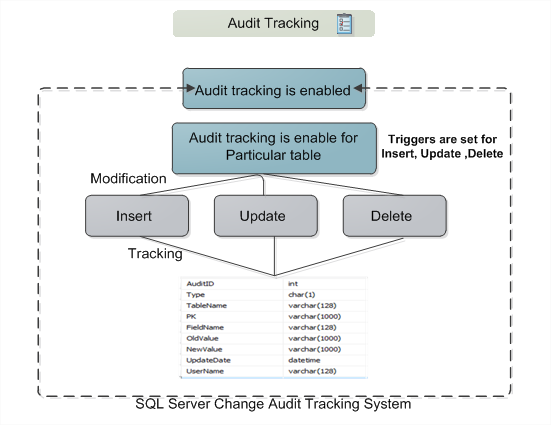
In IT world for audit trails, they refer to keeping an auditable account of who changed the data in a table, when, from what and to what.
Basically, an audit trail is a way of tracking the details of all changes to data in certain database tables – usually in order to check the integrity of financial transactions. It provides a record of who has accessed a database and what operations he or she has performed during a given period of time
Auditing has nothing to do with the SQL standard, and is strictly vendor-dependent — in capabilities, implementation details, and so on.
Now Lets dig into each one by one with other information
Where we have Shadow of each table where we are storing all DML operation related information Details of this is posted in following link
http://www.c-sharpcorner.com/uploadfile/etechmentor/607/
It’s a single table audit implementation with triggers
http://www.dotnetfunda.com/articles/article336-implementing-audit-trail-using-trigger.aspx
· This topic is Big, But I already having post on same topic
Output Clause concept is somewhat not easily acceptable but one of blogger had really explained that in really nice way in following link
http://www.sqlhub.com/2011/07/audit-trail-with-output-clause-in-sql.html
This is one of my favourite because everything is simple and easy to understand ,If your organization can afford triggers this is best solution I will suggest
Hope this Help !! Enjoy Learning !!
For more interesting information on SQL we can also look into similar topics such as
· BISQL # 26 : Audit Trail Part : II- Implementation of Auto Auditing with Pros,Cons
· BISQL # 27 : Audit Trail Part : III-Implementation of Audit Trailing with CDC
· BISQL # 28: Audit Trail Part : IV–Comparing Entity Framework and SQL CDC
· BISQL # 29 : Analysis and Documentation Query
· BISQL # 30 : How Should I Find Information about Data Type
Hope you will like this post on Audit Trail Part I.
If you really like reading my blog and understood at least few thing then please don’t forget to subscribe my blog.
If you want daily link and analysis or interesting link go to following website which will give @ your inbox please subscribe our following link resource blog: Link Resource Website
For More information related to BI World visit my Mentalist Blog
Link Resource Blog >> Daily Interesting links
SQL Server Mentalist >> SQL Learning Blog
Business Intelligence Mentalist >> BI World
Connect With me on
Copyright © 2011 – 2012 Vishal Pawar
Posted by Vishal Pawar
Categories: Optimization, SQL
Tags:
Mobile Site | Full Site
Get a free blog at WordPress.com Theme: WordPress Mobile Edition by Alex King.
[…] BISQL# 25 :Audit Trail Part : I- What is Audit Trailing ? […]
By BISQL # 28 : Audit Trail Part : IV–Comparing Entity Framework and SQL CDC for Audit Trail « SQL Server Mentalist on July 23, 2011 at 12:29 pm
[…] BISQL# 25 :Audit Trail Part : I- What is Audit Trailing ? […]
By List of monthly post of MS BI and SQL blog–July 2011 « SQL Server Mentalist on July 31, 2011 at 10:11 pm
[…] BISQL# 25 :Audit Trail Part : I- What is Audit Trailing ? […]
By List of monthly post of MS BI and SQL blog–July 2011 « (B)usiness (I)ntelligence Mentalist on July 31, 2011 at 10:19 pm
[…] BISQL# 25 :Audit Trail Part : I- What is Audit Trailing ? […]
By List of monthly post of MS BI and SQL blog–July 2011 « Dactylonomy of Web Resource on July 31, 2011 at 10:30 pm